


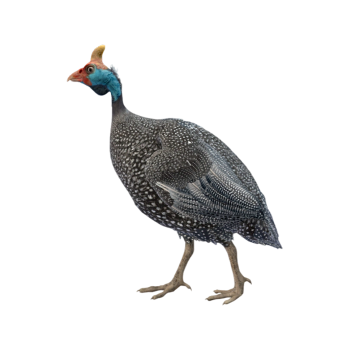
Guinea fowl (3D animated model)
Guinea fowl (scientific name: Numida meleagris), also known as pearl chicken, pheasant, guinea bird. The head of guinea fowl is very small, the face is pale blue and purple, the beak is strong and sharp, the tip of the beak is pale yellow, the back is red, and there is a heart-shaped meat drooping around the back and bottom of the beak. The eyes are glabrous, with a white stripe extending to the upper part of the neck. Neck slender, draped with a ring of purple-blue needle-like feathers. Foot short, hour foot red, adult gray black. The guinea fowl is round and short, has no cockscomb, has no hairs on the top of its head, and has keratinized protrusions, which are called helmets, and its tail feathers are hard and slightly drooping.

Pigeon (3D animated model)

Specimen of Fa
The moa is a bird of the family Ostryiidae. The abdominal feathers are yellow, and the other parts are yellow and black. The body is hypertrophy, the upper limbs are degraded, and the lower limbs are thick and short; the neck is covered with feathers and is short; there are 3 toes. In 1843, Owen named it a terror bird, meaning a large bird that frightens people. In the middle of the 18th century, it was preyed on by European immigrants; by the late 18th century, it was becoming more and more difficult to be caught; 1800 was the last year that people could catch it. The North Island population of New Zealand became extinct in the 17th century and the South Island population became extinct in 1850.

Peregrine Falcon Specimen
Peregrine Falcon, scientific name: Falco rusticolus, Falconidae. The largest falcon has a body length of 45-60cm and a wingspan of 90-115cm. Its beak is curved and sharp, and its feet are covered with strong pectinate scales, which are suitable for tearing prey. The body is stout, the male bird is 48-56cm long, and the female bird is larger (58-60cm); The male bird is grayish blue with dark stripes on the abdomen, and the female bird is brownish brown with dark spots. The staple food lemmings, snow rabbits, puffins and pheasants can subduction at speeds of more than 200 kilometers per hour and use gravitational acceleration (about 25g) to kill them.

Specimen of Green Broad-billed Bird
Green broad-billed bird, scientific name: Calyptomena viridis, passerine broad-billed bird family, round and fat body, broad and short beak, body feather mainly emerald green, throat with chestnut patches, female body color is darker than male birds. Tropical rainforests of Southeast Asia, including Malaysia, Indonesia (Sumatra, Borneo), southern Thailand and Singapore. It inhabits lowland primary forests, secondary forests and bamboo forests, usually below 600 meters above sea level. Banyan fruit (such as figs), berries, insects (beetles, caterpillars) and spiders; wide beak can quickly peel fruit pulp.

Gannet Specimen
Gannet, scientific name: Morus bassanus, gannet family Booby. The largest gannet, with a body length of 80-100cm and a wingspan of 165-180cm, has a long beak with an inflated tip, pure white feathers, black wing tips, and blue-green bare skin at the base of the beak. North Atlantic and North Pacific temperate and frigid waters, breeding sites concentrated in Canada, Ireland, the United Kingdom, Iceland and the northern islands of Japan. Non-breeding period spread to tropical waters, but rarely deep into the equator. The staple food is sardine, mackerel and other cluster fish, which can catch 1-3 fish in a single dive. Young birds need adult individuals to feed with ruminant and semi-digested food.

Emperor Penguin Specimen
King penguins (Aptenodytes) Emperor penguins (Aptenodytes forsteri) are mainly distributed in Antarctica and surrounding sub-Antarctic islands (such as South Georgia Island and Ross Sea), and inhabit floating ice areas and coastal ice-free zones. Penguins have the largest body shape, black and white feathers, and orange-yellow patches on their ears and beaks, adapting to the polar cold environment. Body height of up to 1.2 meters, weight 22-45kg, is the largest existing penguin. Carnivorous, with Antarctic krill (90% of the diet), fish (such as Antarctic cod) and cephalopods as the staple food, diving depth of up to 500 meters.

White tailed sea eagle specimen
The White tailed Eagle, scientific name Haliaeetus albicilla, is a large raptor widely distributed in temperate Eurasia. They usually live near large open water bodies, such as coastal saltwater areas, inland freshwater lakes, wetlands, and rivers. The white tailed sea eagle is known for its strong hunting ability and opportunistic scavenging behavior, mainly preying on fish and waterbirds.
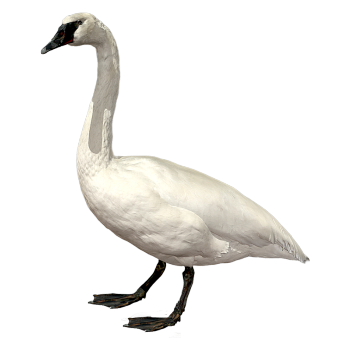
Black billed swan specimen
The black billed swan, also known as the trumpet swan, is the largest native waterfowl in North America and is named after its unique horn like call. The body length is usually between 138 and 165 centimeters, the wingspan can reach 185 to 304.8 centimeters, and the weight is between 7 and 13.6 kilograms. They are the heaviest flying birds in North America. Due to overfishing and habitat loss, the population sharply declined in the early 20th century. By implementing protective measures and reintroducing the project, the population has now recovered to some extent

Southern giant terror bird skeleton
The southern giant terror bird (Dinornis robustus) is a species of terror bird, also known as the South Island giant terror bird. Like other terror birds, they cannot fly. The origin of these birds may be due to the early ancestors of terror birds being able to fly and reach the South Island of New Zealand. The southern giant terror bird is the largest among terror birds. Adult female birds can reach a shoulder height of up to 2 meters and a total height of 3.6 meters, making them the tallest known bird species. It lives in the lowlands of the South Island of New Zealand. It may have become extinct as early as the 13th century.

Black Swan Specimen
The black swan is a bird species belonging to the family Cynoglossidae in the order of geese. The black swan is covered with flocculent gray feathers on its back; The neck is slender and often curved into an elegant "S" shape; The beak is bright red with a "V" - shaped white discharge at the front end; The iris is reddish red, and the tarsus and fins are black. Its physical characteristics are that except for a small part of the primary feathers that are white, the rest of the body's feathers are bright and black, hence the name.

Cuban tricolor macaw specimen
The Cuban tricolor parrot (scientific name: Ara tricolor) is a species of the bird class and parrot family. The body length is about 45-50 centimeters, which is one-third smaller than the largest macaw. Both sexes are similar. The forehead is red, gradually fading into orange, and turning yellow at the nape of the neck. The area around the eyes is white without feathers. The face, jaw, chest, abdomen, and thighs are all orange in color. There are reddish brown feathers on the upper back, which are scallop shaped with green edges. The buttocks, tail feathers, and lower back are blue. The winged feathers are brown, red, and purple blue.

White legged noisy hornbill skull
The white legged noisy hornbill, belonging to the hornbill family, hornbill subfamily, and hornbill genus, is distributed in central and southern Africa. The hornbill is a precious and beautiful large bird species, with a beak that accounts for one-third to half of its body length. It has a copper helmet shaped protrusion on its head called the helmet protrusion, which resembles a rhinoceros horn, hence the name hornbill. The body length of hornbills is about 75 centimeters; The back feathers are pure black with a green metallic luster; The wing edge and feather tip are white.
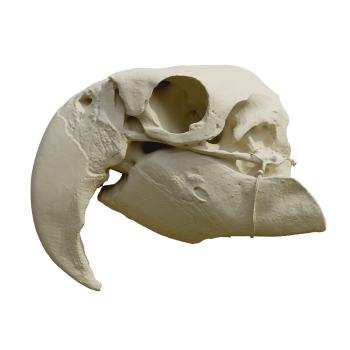
Macaw skull
Macaws are birds of the parrot family in the order Parrotiformes. The beak is sickle shaped and very sharp; Each foot has 4 toes, 2 front and 2 back; The face has no feathers, and the exposed skin is light yellow or pink, with some even having stripes. The body color is brilliant. Named after its strong beak. The lifespan is 60-80 years. Distributed in rainforest wetland areas of Central and South America. I enjoy group activities, mostly foraging in the morning and evening, and resting in the forest during the hot noon. Excitedly, they often make a loud "quack quack" sound. Eating fruits such as palm, it can easily peck open nuts. It is one of the most beautiful and largest parrots in terms of color, as well as possessing the ability to withstand a hundred poisons.

Popular Models
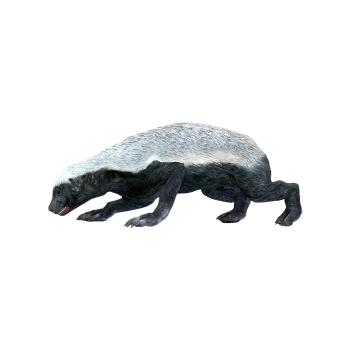
Honey Badger (3D animated model)
194 View
Guinea fowl (3D animated model)
165 View
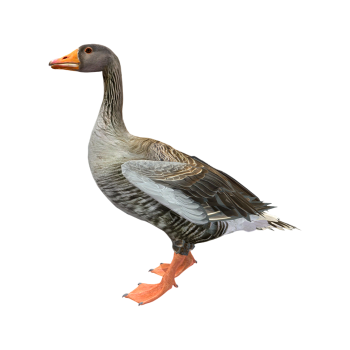
Wild Goose (3D animated model)
187 View
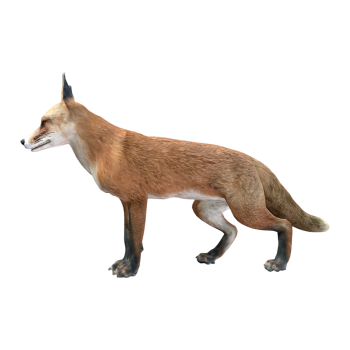
Red Fox (3D animated model)
155 View
Random Model

Blue and white striped ceramic bowl
582 View

High altitude European fern
1003 View

Old electric car battery
820 View

chevrolet Malibu1982
872 View

DCB K-133BYAT Military Truck
733 View

Cast Iron Freestanding Bathtub
328 View

Aston Martin V12 Speedster Supercar
1200 View